Back to projects

Coming Soon

Personal Project2026

Multimodal Visual Assistant

Camera-First AI Assistant · Personal Project

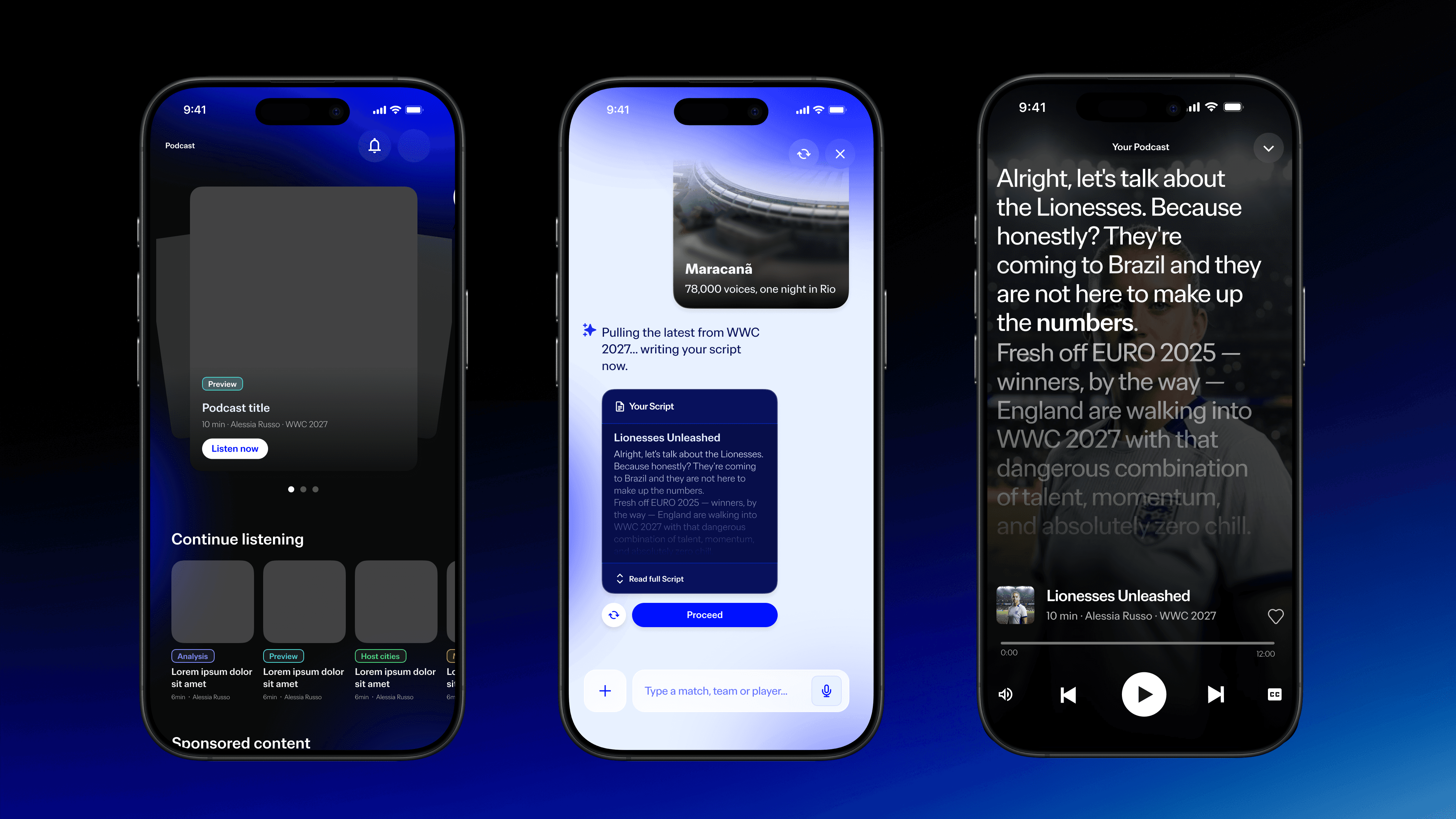
A camera-first iOS assistant: point at anything, tap to select it, and ask what it is, how it works, or what to do next — answered in under two seconds by Gemma running on Cerebras. A second entry point adds a full chat and voice assistant with memory, a browsable capture journal, and tool access. One person across the whole stack: on-device segmentation, the backend orchestrator, and the tool-confirmation layer between them.

Swift / SwiftUISwift / SwiftUIMetalMetalPythonPythonFastAPIFastAPIGoogle Cloud RunGoogle Cloud RunCerebrasCerebrasGemmaGemmaElevenLabsElevenLabsMCPMCP

Point, Tap, Ask

Perception vs. Cognition

Vision produces evidence, never conclusions

If a task has a correct answer computable from pixels alone — segmentation, OCR, barcode decode, similarity — it runs on-device with Apple Vision. Anything needing world knowledge or reasoning goes to Gemma, and only Gemma's voice ever reaches the user.
A Sticker, Not a Spinner

The loading state is the payoff

On-device segmentation isolates the tapped object, a Metal dot-dissolve shader disintegrates the background while the object stays sharp, then it floats onto a paper-like dot-grid canvas as a die-cut sticker with a semantic label pill.

Hard Latency Budgets

Latency is a product requirement

Tap ripple under 50 ms, initial mask under 500 ms, first useful model result under 2 seconds, first spoken audio under 3 seconds — enforced as explicit performance budgets, not aspirations.

Two Ways to Talk

Live Assist Never Freezes

A continuous mode with its own contract

Live Assist is a distinct mode inside the camera tab — an ongoing voice conversation about whatever the camera currently sees, deliberately built to never freeze the UI, unlike the tap-and-ask flow.

One Voice Stack, Two Tabs

Shared infrastructure, isolated audio graphs

Chat's Voice Mode reuses the same VoiceConversationService and SpeechService as Camera's Live Assist rather than reimplementing STT, endpointing, and barge-in — but wires its own AudioPipeline instance so the two tabs' audio never collides.

Model Race

Two models, one prompt, side by side

A long press on Send races the selected Cerebras model against an OpenRouter model on the same question, client-driven with two parallel calls, with an "adopt this answer" action to keep the better response.

Tools With a Confirmation Step

Nothing Writes Without a Preview

A signed token stands between intent and action

Write-capable tools require both read_only:false and an explicit allow_write:true. When the model selects one, the orchestrator sends an immutable action preview the user must confirm before exchanging it for a signed, five-minute execution token — editing or replaying it invalidates the signature.

No Implicit Trust From Metadata

Remote tool metadata never grants authorization

A connected MCP server's own tool descriptions are treated as descriptive text, not as a source of permission. Write tools stay narrowly allowlisted, each with the least-privilege credentials its specific operations need.

A Personal-Project Safety Net

A kill-switch that detaches billing, on purpose

A Pub/Sub-triggered Cloud Function watches the project's budget alerts and, if spend ever reaches the cap, detaches billing from the GCP project entirely — a hard stop for a self-funded prototype, deliberately blunter than anything you'd ship to production.